Death is a Christmas Miracle

Perhaps I have a strange appreciation for the beauty which exists in darkness. I see miracles where others don't, and if that makes me a little bit weird, oh well. This is my story of Christmas miracles.

(The story is based on real experiences, but all details have been fictionalized to protect patient privacy.)

It was Christmas day, exactly one year ago. I was working as a nurse, and it was my very first day on my own in the Intensive Care Unit. I just finished three months of training in critical care, so I had been preparing for this day. I was nervous, excited, and happy to be finally taking on full responsibility for these critically ill patients.

The day began as this story begins: with birth. I stepped on to the elevator, as I do every morning. Following me on to the elevator was an attractive young couple who must have been in their early twenties. The woman was quite visibly pregnant.

“How wonderful,” I thought to myself. “It looks like they are having a Christmas baby! What an amazing gift for the holiday.”

As I looked closer, however, it seemed strange that the woman was standing comfortably and not revealing any signs of labor. “She doesn't look like she's about to have a baby,” I thought as I began to imagine this couple's story in my head. (An elevator ride is an excellent time to think up stories about my fellow passengers.)

They didn't press the button for the labor and delivery floor, so now I knew something was out of the ordinary. Instead, they got off the elevator early and we parted ways. “Well, they must be visiting someone who is sick,” I concluded.

I continued the elevator ride to my floor and soon clocked in for work. Upon arrival to the unit, I got the news that I would be admitting a young man who had arrived to the Emergency Department with a severe cardiac arrhythmia. “He will be coming to the unit in about 30 minutes,” I was told.

The second part of the story begins here: with sickness. The man arrived on my floor. His youthful adventures had finally caught up to him, leaving him now vulnerable and naked under a thin hospital gown in a lumpy old hospital bed. He had come to town on a holiday vacation. He had never had any obvious health problems before, and these frightening symptoms had caught him and his family all by surprise. Perhaps you might imagine waking up early on Christmas morning to chest palpitations, and profuse sweating.

It wasn't long before his family started trickling in to visit. This moderate sized crowd had been patiently sitting in the waiting room. As I looked, I was startled to see before me the young couple from the elevator. Their radiant youth, an image of fertility, stood in contrast to the sterile and quiet halls of the ICU. They entered my patient's room and shared their love with him, confirming the stories I had made up in the elevator. They were indeed there to visit someone who was sick.

As that patient was settled, the next part of the story begins: with aging. I walked across the hall to return to the other patient in my assignment. This was an older woman who had been found at home unresponsive. The quick response of paramedics had kept this woman from dying, but she was old and her brain function was simply not going to recover. After many days of following the top protocol, she was still not showing any signs of improvement. An MRI showed diffuse damage to the tissue of her brain, and it was time for the family to make a decision.

Her husband would be making the final decisions regarding any plan of care. They had been married for 52 years, and he had spent every day at the hospital since his wife had arrived.  He sat with her and prayed, and sometimes begged her to wake up. After he arrived on this particular morning, the doctors sat him down and gave him the very real and very unfortunate prognosis. Her chance of recovering to any meaningful level of health was almost zero. We had tried weaning her off of the mechanical ventilator, but she did not tolerate it. The machine would be necessary to keep her alive.

We sat in silence, as he absorbed the news. He was calm as he gave it thought. Then he began to explain, “You see, today is a sort of anniversary for us. It's Christmas. I just think... well, if we could just keep her comfortable for two more days, then I'd be ready to say goodbye. I just don't want her to die today. Not today.”

“Unfortunately,” the doctor compassionately explained, “we can't keep her alive and also keep her comfortable. The tube in her throat is uncomfortable, the machine is forcing air into her lungs. If you want her to be comfortable, or if you want her to stay alive, those are two different goals. It is your decision what to do, and we will support you with whatever you decide. It's ok if you want to take some time to think about it.” He took his time, he talked with the rest of the family, and within a few hours he had made a decision.

The final part of this Christmas story now begins here: with death. The decision was made to withdraw care and provide only what treatment was necessary to make this patient comfortable as she passed. As the afternoon grew late, I began the morphine drip, giving time for it to circulate through her system and ease any possible pain that her brain could still register. Soon after that, we pulled the breathing tube from her throat and removed the last devices of life support. She was on her own, to breath or not breath as her body could tolerate. She gasped for air, and her gasps were eerily similar to the first gasps of a newborn still drenched in the fluids of it's birth. These dying gasps continued, and just as a baby grows stronger with each gasp, this woman grew only weaker.

The family prayed, and spoke gently to her. The husband grabbed her hand and reminded her: “remember this day? This is the day I proposed to you.” The memory seemed as though it was still crisp in his mind, as though he was talking to the young woman he once loved while looking into the eyes of his aged and dying wife.

She passed peacefully soon after that. The family said their goodbyes and it was over. His final Christmas gift to her was to comfort her as she died. Their gift to me was to allow me into such a vulnerable and touching moment in their lives.

I was new to the ICU, and although I had seen patients die before, this was the first time in which the family officially made the decision to withdraw care. It was a first which I will remember for the rest of my life.

Working in the ICU, I am often confronted with the cost of dying. There are the monetary costs: more than $50 Billion dollars each year paid by Medicare on doctor and hospital bills for the last two months of patients' lives. A stay in the ICU alone can cost over $10,000 a day.

But, there are other costs as well. Had the family continued with full treatment for this patient, she would have eventually started to decline. Perhaps an infection would start, or her breathing would worsen. Her skin would begin to break down. The delicate balance of life would become harder to maintain. More medicines would be needed, more forms of life support. It would have only prolonged the inevitable.

Being human, we are inescapably bound to these four stages of life: birth, sickness, aging, and death. People recognize birth as a miracle. It is easy to imagine the maternity ward on Christmas day, so full of smiles and so full of love. Birth is the beginning of life, but life also ends with death. Birth and death do not exist without each other. This is the miracle which I will honor this Christmas, not just birth, but the entire cycle from birth to death. Life is what gives us this brief and momentary glimpse into the great mystery of being human. We awaken into the world to explore, to discover, to participate and to stand in awe. Then, our eyes close shut one final time. This brief glimpse ends.

For me, it was a miracle to be a part of these people's lives on Christmas. For me, it was a gift, and a blessing. Amid the awareness of death, the experience itself was so fully alive.

I feel grateful, and in gratitude I share this Christmas tale with you. This is for you who are also basking in the mystery of it all and embracing the inevitable. This is for you who do not run from our nature, but love it even when it hurts. This is for you who value truth, and honesty, and realness in a world which often encourages denial.

Even if you don't celebrate Christmas, well, Merry Christmas nonetheless. May you appreciate this miracle of life, death, and the whole human experience.

From me to you this Christmas.

“Just as mountains of solid rock,
Massive, reaching to the sky,
Might draw together from all sides,
Crushing all in the four quarters—
So aging and death come
Rolling over living beings“

- The Buddha

Relational Insight Retreat (First ever of it's kind!)

I have decided that this summer I will finally be creating an event that I have been dreaming about for years. I don't think there is anything else quite like this that has ever been done, and personally I am giddy with excitement about how it will unfold.

The idea is to create an intensive five day meditation retreat for a small group, that includes a relational component. There will be silent meditation, like most meditation retreats, but there will also be a meditative practice with the focus of awareness on relationship itself.

The purpose of the retreat is to cultivate awareness of our experience from moment to moment to moment, both as we go within ourselves in silent meditation, and as we relate with each other in connection. Through the cultivation of awareness, we will reveal the truth of each moment - the truth within ourselves, and the truth we see in others.

-----

I am still putting building the structure of this retreat, but here is the basic idea in a nutshell.

Minimal Facilitation

I certainly have a lot of experience facilitating, leading, teaching, and organizing these kinds of experiences, but I want the facilitation to be kept to a minimum. I also want to be a participant. I will be available for support, but the basic idea of the retreat will be of minimal facilitation from me. It will depend on self-discipline, participation from everyone, and a tight structure (see below).

Participants will be expected to already have prior experience in either meditation, or any form of deep relational work (such as circling, the diamond approach, etc.) Preferably, the participants will be very experienced and will bring a lot to share with the group, so that we all may benefit from each other's wisdom. I will lead the group into the first day of practice, and then the group will carry it's own momentum. During meditation hours, their will be an emphasis on insight meditation (vipassana), though participants may also practice whatever silent meditation technique they prefer.

The relational meditation practice will be guided at first to set the context for practice. For those familiar with the practice of "circling" it may resemble something like an "organic circle." In short, the group will speak and interact with each other in a way that maintains our awareness on the ever-changing experience of the present moment. [More information on relational meditation practice to come...]

During personal time periods, one will be able to practice according to their own preference in line with the general purpose of the retreat.

Minimal Facilities,
(and work contribution from every participant)


To keep costs low, and to minimize unnecessary work, the facilities will be kept minimalist. Three meals will be eaten each day, and snacks will be available, but the meals will be kept simple and easy to prepare. Breakfast will be oatmeal, cereal, fruit, yogurt, and toast. Lunch will be the big meal of the day. Dinner will be soup, salad, and whatever fruit and snacks are available.

Each participant will be expected to do a yogi job each day, cooking, cleaning, time keeping, etc. so that the retreat can run smoothly without need for outside help.

Self Discipline


The next key principle of this retreat will be self discipline so that we can stick to a tight structure and put our full effort into doing the important work of self awareness. Participants will be expected to commit fully to the practice and the purpose of the retreat.

Discipline will include:
- Strict time table as noted below. While sessions will not be enforced as mandatory, anyone opting out of a session will be expected to take care not to disturb the group practice.
- Buddhist Five Precepts (No lying, killing, stealing, intoxication, or sexual misconduct - and for this retreat, no sexual conduct of any kind.)
- Cell phones and electronics are to be turned off for the entire retreat unless absolutely necessary.
- Noble silence between the last meditation at night and the first meditation in the morning.
- A commitment to stay for the full retreat and stay with the process as it unfolds.
- Journals and books will be allowed, but with the expectation that they support the purpose and atmosphere of the retreat.

Time Table

Weds-Sunday (Five days)

Wednesday:
3:00 PM Arrive and get settled
5:00 PM Dinner and introductions
7:00 PM Beginning Meditation and Opening Formalities
8:30 PM Noble Silence Begins - personal time until bed

Thursday - Saturday:
6:00am (optional) Movement Practice - yoga, etc.
7:00am Breakfast and Cleanup
8:00am Morning Group Meditation
* 9:00am Noble Silence ends for the duration of daytime activities
9:00am Relational Meditation in group (with breaks as needed)
11:00am Cook Lunch and Chores
12:00pm Eat Lunch/Cleanup/Personal Time
2:00pm Afternoon Group Meditation
3:00pm Relational Meditation in group (with breaks as needed)
6:00pm Dinner and Cleanup
7:00pm Evening Group Check In
7:30pm Evening Group Meditation
* 8:30pm Noble Silence begins for the duration of the night
8:30pm Personal Time until sleep

Sunday:
7:00am Breakfast
8:00am Morning Group Meditation
* 9:00am Noble Silence ends
9:00-12:00 Loving Kindness and Closing
12:00 Final Lunch, Cleanup, Goodbyes
Departure after cleanup as necessary.

Location

Location is still to be determined. I would like to do one on the west coast and one on the east coast so that it's accessible for my friends on both sides of the country. The west coast retreat will probably be held in Felton, CA (near Santa Cruz).

The location(s) will ideally be in a quiet area with some access to trails and nature.

----

That is the idea for now. More details will be added as they become available.

Be Happy

Retreat at Kelseyville Center - NCVC

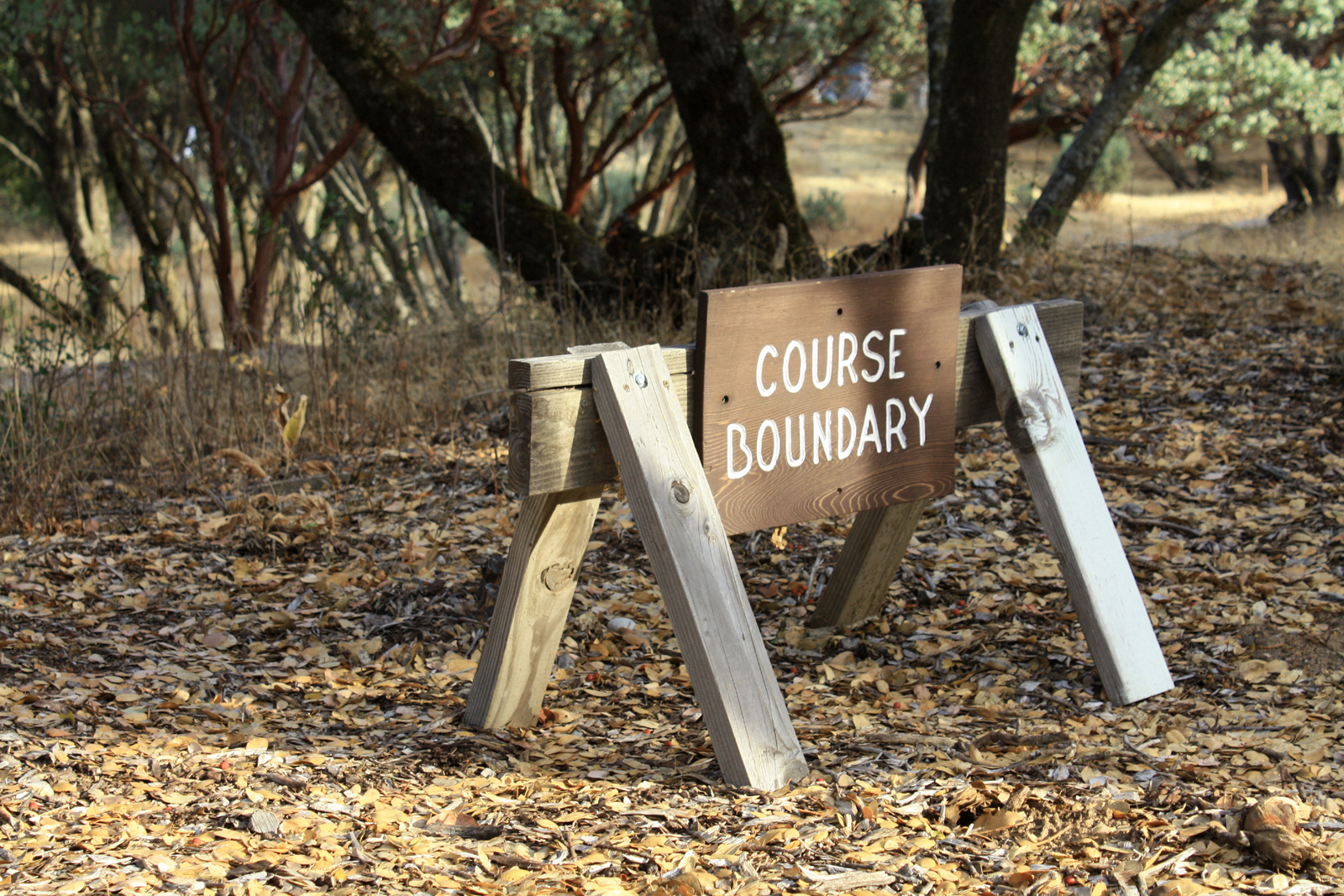
I recently sat a course at the new Goenka center in Kelseyville, CA.  It was a wonderful place for a retreat.  It's located about 20 minutes from Harbin Hot Springs, and about 2-3 hours north of San Francisco. 

It's a smaller center than the North Fork center.  The smaller size makes things much easier, logistically.  The line for lunch isn't as long, and it isn't too crowded.  I saw some amazing wildlife: blue-tailed skink, a family of wild turkey, lots of deer, and more.

The walking trails go up the hill behind the meditation hall, so you can get quite a workout going up and down the hill.  It offers a tranquil forest setting, which is great for a break from sitting.  I stayed in a tent at the top of the hill, and the tent spaces were very nice. They were farther from the street, and somewhat secluded.  I loved seeing the stars at night through the mesh ceiling of my tent. 

I don't know what the indoor accommodations were like, but I saw quite a few dorms.  I don't think they have very many single rooms, so be prepared to share your space.  The showers were clean and plentiful. 

I had a great time, and most likely I will be back again.

Long Term Service - FAQ

A number of people have asked me questions about my experience living at the Vipassana center in North Fork, so I wanted to do a follow up to one of my original posts.  I know that it can sometimes be hard to get a hold of anyone at the center to answer your questions (after all, they are all volunteers.)  So, here are my answers.  I will try to update this if I get more questions:

Q: I have sit a couples of course and recently I have been thinking about staying there and serving the the center on a long/short term basis... I would like to know when you are not serving or sitting the course.  Do they have a fixed schedule for you to follow?  Will they allow access to the internet etc during those times or even when you were serving?

A: If you are staying at the center, here are the rules as far as I know.  This is UNOFFICIAL... so I will always defer to whatever they tell you:
1) You have to stay on the five precepts and meditate a minimum of 2 hours per day no matter what. Even if you take a day trip up to Yosemite, there shall be no boozing and fornicating.
2) When serving a course, you are expected to follow the server schedule which includes six hours of work per day and 3 hours of sitting.  If, for some reason you need to sit or rest more and work less, they usually can accommodate that.  Internet use, phone calls, leaving the center, etc. are all discouraged while a course is in progress, but sometimes they will make an exception if you ask and it seems reasonable.
3) Courses generally end on a Sunday morning.  That Sunday is considered the day off.  (Yep, one day off every 2 weeks.)  You still need to meditate 2-3 hours, but otherwise you can do whatever you want: internet, yosemite, skinny dipping in waterfalls, hiking, movies.  One time, a group of servers went to see the latest horror movie which just came out (I declined the invitation.)
4) From Monday until the next course is considered a service period which has it's own rule.  Basically, you will follow a schedule similar to the server schedule (6 hours of work, 3 hours of meditation)  except with a bit more lenience about leaving for day trips or using internet, etc.
5) In general, at no time are you supposed to do anything other than practice dhamma or do dhamma service on center grounds.  So, that means no reading (other than approved dhamma books.) No listening to your ipod, no playing guitar, etc.  If you want, you can just drive down to the end of the driveway and play your guitar by the street for an hour and then return.  Personally, I kind of like this rule, because it really keeps the intention crystal clear about the purpose of the center.
6) One more note: the time after lunch clean up, from 1:00-2:30 is considered break time and it is highly recommended to get in bed and take a nap.  This is great rest, and you will probably need it. If a there is no course going on, it can be a good time for a quick email check, as well.

Q: Anyway, it is great to know that I am not the only one want to live the dream of staying at a center.  It seems a little scary but at least now I know someone else has done it.

A: You are definitely not the only one.  I met dozens of servers staying anywhere from 2 days to 2 years or more.  The scariest part is taking the leap, but actually there is nothing to be afraid of.  It will take some work to return to your householders life after your stay at the center, but Vipassana meditators never shy away from a little work, right?

My Photo in a German Textbook

Here is a photo I took which is now in print across the world in a German textbook.  Cool!

I put the text into google translate, and this is what it said:
What is reborn?
Ajahn Amaro replied:
"To be born again by and large our habits.
In essence, this is it
Whatever the reason, the mind holds, that is born again - what we love, hate, fear, and admire what we have opinions.
Behind our identification with these aspects of the mind lies a driving force.
Attachment is like a flywheel.
Enlightenment is the end of rebirth, which means: perfect non-attachment to all thoughts, feelings, perceptions, bodily sensations and ideas, full non-identification.
So when we speak of it, that we have birth and death behind us, from the end of rebirth, of enlightenment, this is actually the natural constitution of the mind - not to be confused with any internal or external object identified or caught.
Is born from life to life again that in us which is blindly identified with objects.

Cushion Report: Christmas in the Woods

Here's a report from my meditation experiences on my most recent retreat. I'm not sure if I've explained before why I post the details of my inner life on the internet for all to see. So, first let me explain the reasoning and then on to the report.

The thing about meditation that I never understood before I actually did it is that it is real. There is a lot that goes on in the mind that has significant consequences on one's experience of life – much more than most people realize. When I mentioned my retreat to a friend recently, he joked: “My meditation is watching TV.” It was a good joke, and I laughed, but I was also reminded of what I used to think meditation was. I'm not sure what I thought it was, but I didn't understand why anyone prefer such an activity over something as enjoyable as watching TV.

However, the thing about the inner workings of meditation is that no one else knows what's going on if you don't talk about it. It's called the inner world because it is inaccessible to other people without the aid of descriptions and explanations straight from the person's mouth. So, in the spirit of understanding the nature of subjective experience, I like to share my experience and I like to hear about the experiences of others. It may be that someday the inner world is no longer shrouded in mystery and is as well known to humanity as the rest of the natural world.

So, let me begin. My memory is already fading, but I recall that for the first couple of days my mind was settling down significantly. I had a number of sits where I would walk to the hall thinking “I have no idea what's going to happen, and I don't even think I know what to do.” And, then I would sit, and my attention would go the breath, and I would become very very calm. By the end of the sit, I was quite at peace.

This deepening of concentration was a theme at different points through the retreat. At one point, I hit a stage which the mind was so naturally with the breath that it would've taken effort to place the mind elsewhere. The way I would describe it is that applied and sustained effort dropped away and the mind just stayed put. The Buddha talked about “applied and sustained effort,” but I don't know if he meant the same thing as me. I'm using the words just in a literal sense of applying and sustaining effort.

Also worth noting were a few moments interspersed throughout the retreat where thinking really started to drop away. I was quite surprised by such an experience, because it was so different to be aware in a way where thoughts aren't arising. All that was there were sensations, arising and passing. However, these no-thought moments were very brief (like maybe a second). I remembered back to an event that occurred a couple of years ago in which I woke up from a dream to find myself in a very deep thoughtless state of consciousness and this lead to an instant reaction of fear. In that moment, it was a great fear that I didn't exist. So, I take it as a good sign of improvement that I can now access a similar state without any averse reactions.

Turning the mind toward insight, I found my mind being blown quite a few times throughout the retreat. There were many moments of “no way! Whaaa??!,” as I discovered more and more layers of experience which had been shrouded in delusion. I may say that things certainly were not the way I thought they were. Over and over again. Yet, I set my mind to push onward and keep practicing through every precious moment of the retreat.

There were times during which the practice was revealed to me with stunning clarity, and it all seemed so simple. All that was needed was to just remain aware of what's happening right now. It seemed so simple. As attention grew more and more attuned to the direct and ever changing experience of right now, things began to synchronize and settle. As the mind began to cloud again, and things became unknown and confusing, there was faith to keep going just being aware of the moment as it arises and as it passes. And, with time, these chunks of unknown experience would also begin to dissolve and break apart, bringing insight and understanding.

I have often thought of there being a moment in the retreat at which time I can say to myself: “this was worth the money.” Of course, with this retreat, and all Goenka retreats, there is no money to pay, so it is purely a metaphorical expression. What it means to me is that all of the time, effort, and expenses of every kind were worth it for the benefit of the insights I gained here. Usually, I experience this early on in the retreat, and then get several more days of bonus value after that. This high return on investment may explain why I keep going back for more. During this retreat, I remember some profound insights occurred on day 4 that made it all worthwhile for me. I thought to myself, “this was worth the money.” Then, a number of times on the days to come, I got exponentially more out of the retreat than just those piddly first four days.

It is hard to explain what I got, however. The best I can say is that when I have been walking around for years inside a very deeply embedded delusion or illusion, and then all of a sudden it is seen for what it really is.... these can be the kinds of things that could take years, decades or lifetimes to come across without the tool of meditation.

I understand if this is vague and I don't have any more specifics, but I think I can muster a simple example of what I'm talking about by delusion. Let's say there is a thought which says “I want xyz. Therefore, I want to try to get xyz in the future.” This thought may be so deeply embedded into the background of experience that I never notice that it is a thought. Instead, I think that I actually want xyz, and that I'm actually just going to try to get it. This doesn't seem like a thought; it seems like reality. Then, one day on retreat, perhaps I see the thought arise and pass, like a cloud in the sky. It is empty, it is conditioned, it is just a transitory wave across my mind. It has no reality. The thought vibration of this present moment, this is the reality. “Right now there is thinking.” This is the reality, and, in my understanding, this is awakening. It's a marvelous process.

As I neared day 9, my attention became a bit tumultuous and filled again with thoughts of the future. Nonetheless, I kept at the practice until the very last minute of the last meditation hour while on retreat. I continued to break new ground. Even as we began to speak to others I was gaining valuable insights and maturing in my understanding of being human.

Through it all, I still feel a bit dumbfounded and amazed. I feel like such a beginner and so clueless about the whole thing. I am ready to keep going.

10-Day Vipassana Christmas Course (Occidental, CA)

One Hundred Forty Nine Female Meditators; Ninety Seven Male Meditators; Twenty One Kitchen Staff; Seven Course Managers; Four Assistant Teachers; One Big Video Screen.

The photo to the left doesn't quite capture the magnitude of a hall seating more than 250 meditators. So, let me try to put it into words - messy, but well disciplined - crowded but cooperative - long lines, but loud laughter too - snoring dormitories, but shared experience. Add to this the extra ingredient of a special once a year Christmas holiday-time course to bring people together and make for a thriving 10 day community in the woods of Occidental.

For anyone thinking of attending this course, which has a been ongoing now for several years, I will share some highlights of this year's experience.

The course ended this morning, and I'm typing this now on a foggy winter day, but the weather was sunny and bright for most of the course. There was not a drop of rain this year. This probably made the shoe-room more friendly (less muddy) when entering the hall for both group sits and meals. Yes, the dining hall and meditation hall were in the same building! A office cubicle type partition separated the two and a white cloth separated the women's dining hall from the men's.

Accommodations were tight; women were often left in the bathroom line while the next group sit had already begun. Cushions were close in the hall. Walking the dining room with a full tray of vipassana food was like a dance to avoid bumping one another. The kitchen staff worked nearly non stop through the course keeping a constant load of clean dishes ready for use.

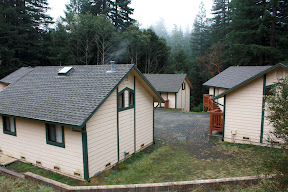
The dormitories had six bunk beds, so provided space for twelve meditators. This made for wonderful antics such as the battle to control the heater and the three windows. Every night, the room temperature was different as we slept. (Note that this was in spite of the posted sign stating: Please ask a manager to adjust the heat). The first few nights I woke up in a hot sweat. But, since I probably not the only one, somebody opened a window and soon it was more like the 40 degree weather outside.

Each person had a distinctive way of either slamming the door with a bang or slowly guiding it closed with a whisper. A number of my dorm-mates were sleep talkers which provided amusement for the insomniacs. I suppose it could have been really bad, but I actually enjoyed sharing in such an intimate experience with them all.

There were not very long walking paths, but enough to get the heart pumping if you wanted to. The food was delicious, as usual, following similar recipes to the North Fork vipassana center.

Very few people left the course before the end, which seemed to be a good sign. All together it didn't have the cushy luxury of the North Fork center, but provided a fun setting for a special holiday. Christmas was on Day six, and I could not think of a better way to spend it.

Perhaps the best part is that when the course was over, we were able to break all the rules (since we were no longer on official vipassana course land). This meant that on Day 11, we gave hugs goodbye, and one guy played his melodious Indian raga flute for us all. Physical touch and music of any kind are always prohibited at course centers. I like breaking rules, especially with flute music in the forest on a cold foggy morning.